
Best Parkinson's Treatment Hospital: Finding Quality Neurological Care
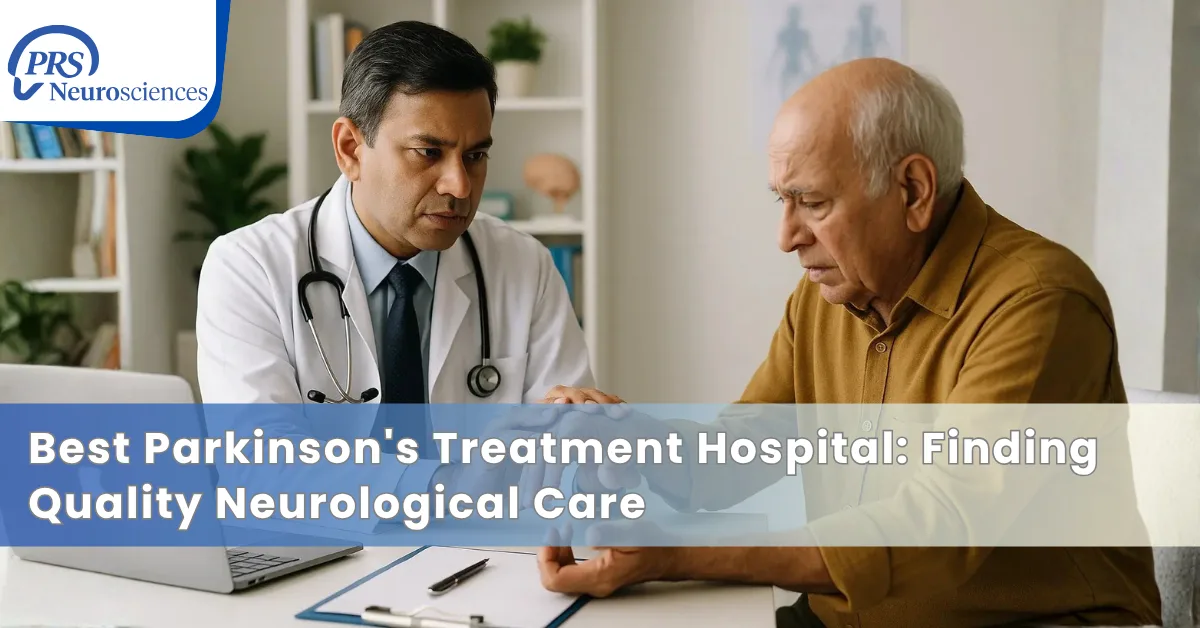
Navigating a diagnosis of Parkinson’s Disease (PD) is a journey that requires more than just a prescription; it requires a dedicated partnership with a medical institution that understands the complexity of the human brain. For many, the search for the Best Parkinson's Treatment Hospital is the first and most critical step toward reclaiming a high quality of life.
Finding quality neurological care isn't simply about locating the largest hospital in the city. It is about identifying a "Center of Excellence" where research, cutting-edge technology, and compassionate multidisciplinary care converge. In this comprehensive guide, we will explore what defines a top-tier Parkinson’s facility, the latest advancements available in 2026, and how to build a care team that addresses every facet of this condition.
1. What Defines the Best Parkinson's Treatment Hospital?
When searching for the Best Parkinson's Treatment Hospital, the term "Center of Excellence" (COE) often surfaces. This isn't just a marketing slogan; it is a rigorous designation awarded by organizations like the Parkinson’s Foundation.
The Criteria for Excellence
A hospital recognized as a leader in quality neurological care must meet specific, high-level standards:
Specialized Expertise: The facility must be led by Movement Disorder Specialists—neurologists who have completed extra years of fellowship training specifically in Parkinson’s and related tremors.
High Patient Volume: Top centers typically treat hundreds of unique Parkinson's patients annually, ensuring the team is well-versed in both common and rare manifestations of the disease.
Active Research & Clinical Trials: A premier hospital doesn't just use existing treatments; it helps create new ones. Access to Phase II and Phase III clinical trials gives patients the opportunity to try emerging therapies years before they hit the general market.
Multidisciplinary Infrastructure: Parkinson's affects movement, speech, mood, and digestion. A top hospital houses all these specialists under one roof, ensuring a "whole-person" approach.
2. The Power of the Multidisciplinary Team
The hallmark of quality neurological care is the multidisciplinary team (MDT). Because Parkinson's is a multisystem disorder, a single doctor cannot possibly address all its challenges.
The "Captain" of the Ship: The Movement Disorder Specialist
Unlike a general neurologist who may see everything from migraines to strokes, a movement disorder specialist focuses almost exclusively on PD and other movement disorders. They are experts in fine-tuning "levodopa" dosages and recognizing the subtle "off-periods" that can frustrate patients.
Neurorehabilitation: The Vital Component
Modern medicine now recognizes that exercise is as important as medication. The best Parkinson's treatment hospitals integrate intensive neurorehabilitation into their standard care.
Physical Therapists (PT): Specialized in gait training and balance. Many centers now offer LSVT BIG programs, which use high-amplitude movements to "recalibrate" the brain’s perception of movement.
Occupational Therapists (OT): They focus on the "activities of daily living," helping patients maintain independence in dressing, writing, and using technology.
Speech-Language Pathologists (SLP): Using programs like LSVT LOUD, they help patients overcome the "quiet voice" and swallowing difficulties common in advanced stages.
Cognitive Rehabilitation & Functional Support: Specialists focus on the restoration of core mental processes—specifically attention, memory, and executive functioning. By implementing targeted strategies, they help individuals bridge the gap between cognitive capacity and real-world participation, ultimately fostering greater independence in both social and professional environments.
3. Advanced Treatment Options: Beyond the Basics
In 2026, the landscape of Parkinson's treatment has shifted from merely "managing symptoms" to "precision neuromodulation." If a hospital only offers basic oral medications, it may not be providing the quality neurological care required for long-term success.
Stereotactic Lesioning: This traditional surgical approach involves the precise, ablative destruction of specific brain tissue responsible for motor symptoms. By creating a localized lesion in areas such as the thalamus or globus pallidus, surgeons can effectively interrupt the faulty signaling pathways that cause tremors or dyskinesia, offering a permanent, non-electronic alternative for symptom management.
Deep Brain Stimulation (DBS) & Adaptive DBS (aDBS): DBS serves as one surgical modality for patients whose symptoms are no longer consistently managed by medication. The most advanced centers now offer Adaptive DBS (aDBS), a "closed-loop" system that utilizes AI-driven sensors to monitor brain activity in real-time. Unlike traditional DBS, which delivers a constant stream of electricity, aDBS delivers pulses only when the brain requires them, significantly reducing potential side effects and extending device battery life.
Continuous Infusion Therapies
For many, the "rollercoaster" effect of pills—where symptoms return between doses—is the biggest challenge. Leading hospitals now offer:
Vyalev (Subcutaneous Levodopa): Approved recently, this 24-hour pump delivers medication through a small tube under the skin, providing a steady stream of levodopa and eliminating the "ups and downs" of oral therapy.
Duodopa (LCIG): An intestinal gel delivered via a small surgical port, ideal for those with severe motor fluctuations.
Focused Ultrasound (FUS)
For patients who cannot undergo invasive surgery, Focused Ultrasound is a game-changer. Using guided MRI, surgeons can target and "ablate" the specific brain cells causing tremors—all without a single incision.
4. The Role of Wellness
A hospital's quality is often reflected in its wellness programs. The best Parkinson's treatment hospitals don't just see you for a 20-minute checkup; they provide a community.
Neuro-Plasticity Programs: Evidence-based movement therapies—such as Rock Steady Boxing and Dance for PD—leverage neuroplasticity to improve balance, gait, and slow functional decline.
Nutrition & Neuropsychology: Holistic care to manage the "protein effect" on medication absorption while treating "hidden" non-motor symptoms like anxiety and cognitive fog.
5. The Future of Care (2026 and Beyond)
We are entering an era of "Disease Modification." While we previously focused on masking symptoms, the current focus in the best Parkinson's treatment hospitals is on slowing the disease itself.
Alpha-Synuclein Targeting: Trials are currently underway for drugs (like prasinezumab) that aim to clear the toxic protein clumps in the brain.
Stem Cell Therapy: While still experimental, centers in Sweden and the USA are seeing promising results in "replacing" lost dopamine neurons using lab-grown cells.
Wearable Monitoring: Top clinics now use smartwatches and biosensors to track your movements at home, allowing doctors to adjust your meds based on real-world data rather than a 15-minute office visit.
Conclusion: Taking Control of Your Journey
Finding the Best Parkinson's Treatment Hospital is an investment in your future. Quality neurological care is a marathon, not a sprint, and the environment in which you receive treatment can significantly alter your trajectory.
Whether it is the precision of a movement disorder specialist, the innovation of neurorehabilitation, or the hope offered by a clinical trial, the right hospital will empower you to live a life defined by your abilities, not your diagnosis. By choosing a facility that embraces a multidisciplinary, technology-forward approach, you are choosing to fight back against Parkinson’s with the best tools available in modern medicine.
Navigating a diagnosis of Parkinson’s Disease (PD) is a journey that requires more than just a prescription; it requires a dedicated partnership with a medical institution that understands the complexity of the human brain. For many, the search for the Best Parkinson's Treatment Hospital is the first and most critical step toward reclaiming a high quality of life.
Finding quality neurological care isn't simply about locating the largest hospital in the city. It is about identifying a "Center of Excellence" where research, cutting-edge technology, and compassionate multidisciplinary care converge. In this comprehensive guide, we will explore what defines a top-tier Parkinson’s facility, the latest advancements available in 2026, and how to build a care team that addresses every facet of this condition.
1. What Defines the Best Parkinson's Treatment Hospital?
When searching for the Best Parkinson's Treatment Hospital, the term "Center of Excellence" (COE) often surfaces. This isn't just a marketing slogan; it is a rigorous designation awarded by organizations like the Parkinson’s Foundation.
The Criteria for Excellence
A hospital recognized as a leader in quality neurological care must meet specific, high-level standards:
Specialized Expertise: The facility must be led by Movement Disorder Specialists—neurologists who have completed extra years of fellowship training specifically in Parkinson’s and related tremors.
High Patient Volume: Top centers typically treat hundreds of unique Parkinson's patients annually, ensuring the team is well-versed in both common and rare manifestations of the disease.
Active Research & Clinical Trials: A premier hospital doesn't just use existing treatments; it helps create new ones. Access to Phase II and Phase III clinical trials gives patients the opportunity to try emerging therapies years before they hit the general market.
Multidisciplinary Infrastructure: Parkinson's affects movement, speech, mood, and digestion. A top hospital houses all these specialists under one roof, ensuring a "whole-person" approach.
2. The Power of the Multidisciplinary Team
The hallmark of quality neurological care is the multidisciplinary team (MDT). Because Parkinson's is a multisystem disorder, a single doctor cannot possibly address all its challenges.
The "Captain" of the Ship: The Movement Disorder Specialist
Unlike a general neurologist who may see everything from migraines to strokes, a movement disorder specialist focuses almost exclusively on PD and other movement disorders. They are experts in fine-tuning "levodopa" dosages and recognizing the subtle "off-periods" that can frustrate patients.
Neurorehabilitation: The Vital Component
Modern medicine now recognizes that exercise is as important as medication. The best Parkinson's treatment hospitals integrate intensive neurorehabilitation into their standard care.
Physical Therapists (PT): Specialized in gait training and balance. Many centers now offer LSVT BIG programs, which use high-amplitude movements to "recalibrate" the brain’s perception of movement.
Occupational Therapists (OT): They focus on the "activities of daily living," helping patients maintain independence in dressing, writing, and using technology.
Speech-Language Pathologists (SLP): Using programs like LSVT LOUD, they help patients overcome the "quiet voice" and swallowing difficulties common in advanced stages.
Cognitive Rehabilitation & Functional Support: Specialists focus on the restoration of core mental processes—specifically attention, memory, and executive functioning. By implementing targeted strategies, they help individuals bridge the gap between cognitive capacity and real-world participation, ultimately fostering greater independence in both social and professional environments.
3. Advanced Treatment Options: Beyond the Basics
In 2026, the landscape of Parkinson's treatment has shifted from merely "managing symptoms" to "precision neuromodulation." If a hospital only offers basic oral medications, it may not be providing the quality neurological care required for long-term success.
Stereotactic Lesioning: This traditional surgical approach involves the precise, ablative destruction of specific brain tissue responsible for motor symptoms. By creating a localized lesion in areas such as the thalamus or globus pallidus, surgeons can effectively interrupt the faulty signaling pathways that cause tremors or dyskinesia, offering a permanent, non-electronic alternative for symptom management.
Deep Brain Stimulation (DBS) & Adaptive DBS (aDBS): DBS serves as one surgical modality for patients whose symptoms are no longer consistently managed by medication. The most advanced centers now offer Adaptive DBS (aDBS), a "closed-loop" system that utilizes AI-driven sensors to monitor brain activity in real-time. Unlike traditional DBS, which delivers a constant stream of electricity, aDBS delivers pulses only when the brain requires them, significantly reducing potential side effects and extending device battery life.
Continuous Infusion Therapies
For many, the "rollercoaster" effect of pills—where symptoms return between doses—is the biggest challenge. Leading hospitals now offer:
Vyalev (Subcutaneous Levodopa): Approved recently, this 24-hour pump delivers medication through a small tube under the skin, providing a steady stream of levodopa and eliminating the "ups and downs" of oral therapy.
Duodopa (LCIG): An intestinal gel delivered via a small surgical port, ideal for those with severe motor fluctuations.
Focused Ultrasound (FUS)
For patients who cannot undergo invasive surgery, Focused Ultrasound is a game-changer. Using guided MRI, surgeons can target and "ablate" the specific brain cells causing tremors—all without a single incision.
4. The Role of Wellness
A hospital's quality is often reflected in its wellness programs. The best Parkinson's treatment hospitals don't just see you for a 20-minute checkup; they provide a community.
Neuro-Plasticity Programs: Evidence-based movement therapies—such as Rock Steady Boxing and Dance for PD—leverage neuroplasticity to improve balance, gait, and slow functional decline.
Nutrition & Neuropsychology: Holistic care to manage the "protein effect" on medication absorption while treating "hidden" non-motor symptoms like anxiety and cognitive fog.
5. The Future of Care (2026 and Beyond)
We are entering an era of "Disease Modification." While we previously focused on masking symptoms, the current focus in the best Parkinson's treatment hospitals is on slowing the disease itself.
Alpha-Synuclein Targeting: Trials are currently underway for drugs (like prasinezumab) that aim to clear the toxic protein clumps in the brain.
Stem Cell Therapy: While still experimental, centers in Sweden and the USA are seeing promising results in "replacing" lost dopamine neurons using lab-grown cells.
Wearable Monitoring: Top clinics now use smartwatches and biosensors to track your movements at home, allowing doctors to adjust your meds based on real-world data rather than a 15-minute office visit.
Conclusion: Taking Control of Your Journey
Finding the Best Parkinson's Treatment Hospital is an investment in your future. Quality neurological care is a marathon, not a sprint, and the environment in which you receive treatment can significantly alter your trajectory.
Whether it is the precision of a movement disorder specialist, the innovation of neurorehabilitation, or the hope offered by a clinical trial, the right hospital will empower you to live a life defined by your abilities, not your diagnosis. By choosing a facility that embraces a multidisciplinary, technology-forward approach, you are choosing to fight back against Parkinson’s with the best tools available in modern medicine.
ಚಂದಾ ನಮ್ಮ ನ್ಯೂಸ್ಲೆಟರ್ ಗೆ
