
Rigidity in Parkinson’s Disease: Symptoms, Causes & Effective Treatments
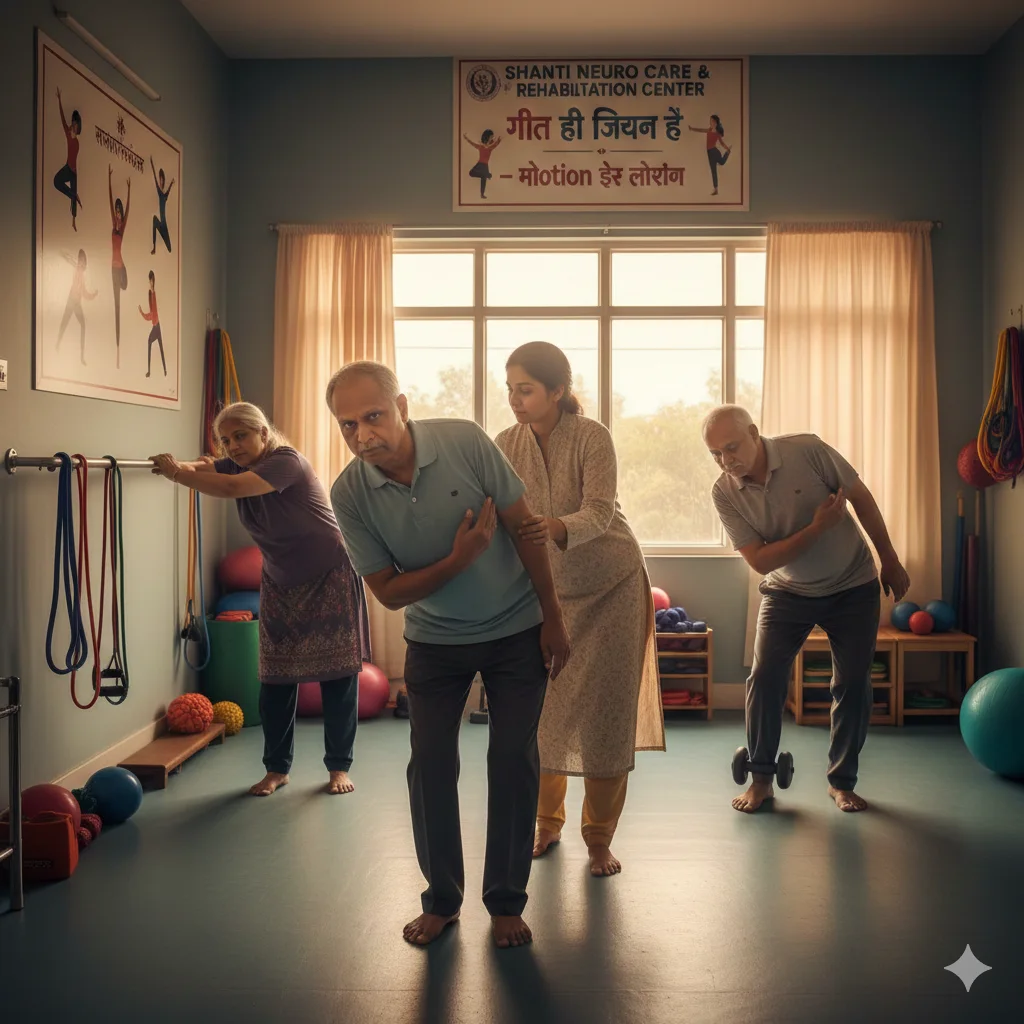
Rigidity is one of the cardinal motor symptoms of Parkinson’s Disease (PD). It refers to the stiffness and inflexibility of the muscles, which don't relax as they should. Unlike normal stiffness from a workout, PD rigidity is constant and can affect the limbs, neck, and trunk. It causes pain, limits range of motion, and contributes to the characteristic "stooped" posture of Parkinson's.
The "Lead Pipe" Stiffness
In a healthy body, when you move your arm, one set of muscles contracts while the opposing set relaxes. In Parkinson's, the signals from the brain get crossed. The muscles remain in a state of semi-contraction all the time. Doctors often describe this as "Lead Pipe Rigidity" (constant resistance to movement) or "Cogwheel Rigidity" (jerky, ratchet-like resistance when a limb is moved).
How Rigidity Affects Daily Life
1. Pain and Discomfort
Rigidity is a major cause of pain in PD. It often starts in one shoulder or arm and is frequently misdiagnosed as arthritis or a frozen shoulder before PD is identified.
2. Reduced Range of Motion
Arm Swing: One of the earliest signs of PD is the loss of arm swing on one side while walking.
Dressing: Difficulty putting on a coat or buttoning a shirt because the arms won't bend easily.
3. Postural Changes
Stoop: Rigidity in the back and neck muscles pulls the body forward, leading to the "simian" (ape-like) posture.
Balance: A stiff trunk cannot twist or adjust quickly to prevent a fall.
4. Facial Masking (Hypomimia)
Rigidity affects the small muscles of the face, leading to a "poker face" or lack of expression, even when the person is feeling happy or sad.
Management and Treatment
1. Medication
Levodopa: Since rigidity is caused by dopamine deficiency, dopamine replacement therapy is usually very effective at relaxing the muscles.
Botox: For severe, localized rigidity (like in the neck or toe curling), Botox injections can force the muscle to relax.
2. Physical Therapy and Exercise
Stretching: Daily stretching is non-negotiable. It helps maintain muscle length and joint flexibility.
Rotation Exercises: Exercises that involve twisting the trunk (like yoga or dancing) are vital to counteract the stiffness.
Big Movements: The LSVT BIG program teaches patients to use exaggerated movements to overcome the body's tendency to shrink and stiffen.
3. Massage and Heat
Warm baths and massage can provide temporary relief from the pain associated with rigidity.
Key Takeaways
It's not just aging: Severe stiffness that doesn't go away with rest is not normal aging.
Keep moving: Inactivity makes rigidity worse. "Motion is lotion" for the joints.
Watch the posture: Consciously checking and correcting your posture throughout the day helps fight the stoop.
Facial exercises: Making funny faces in the mirror can help keep facial muscles mobile.
FAQ
Q: Why does my shoulder hurt so much?
A: Rigidity often presents as deep, aching muscle pain. If it's on the same side as your tremor, it's likely PD-related.
Q: Will stretching cure rigidity?
A: It won't cure the underlying disease, but it prevents the secondary complication of permanent muscle shortening (contractures).
Q: Does stress make it worse?
A: Yes, anxiety and stress increase muscle tension, making rigidity noticeably worse. Relaxation techniques can help.
Rigidity is one of the cardinal motor symptoms of Parkinson’s Disease (PD). It refers to the stiffness and inflexibility of the muscles, which don't relax as they should. Unlike normal stiffness from a workout, PD rigidity is constant and can affect the limbs, neck, and trunk. It causes pain, limits range of motion, and contributes to the characteristic "stooped" posture of Parkinson's.
The "Lead Pipe" Stiffness
In a healthy body, when you move your arm, one set of muscles contracts while the opposing set relaxes. In Parkinson's, the signals from the brain get crossed. The muscles remain in a state of semi-contraction all the time. Doctors often describe this as "Lead Pipe Rigidity" (constant resistance to movement) or "Cogwheel Rigidity" (jerky, ratchet-like resistance when a limb is moved).
How Rigidity Affects Daily Life
1. Pain and Discomfort
Rigidity is a major cause of pain in PD. It often starts in one shoulder or arm and is frequently misdiagnosed as arthritis or a frozen shoulder before PD is identified.
2. Reduced Range of Motion
Arm Swing: One of the earliest signs of PD is the loss of arm swing on one side while walking.
Dressing: Difficulty putting on a coat or buttoning a shirt because the arms won't bend easily.
3. Postural Changes
Stoop: Rigidity in the back and neck muscles pulls the body forward, leading to the "simian" (ape-like) posture.
Balance: A stiff trunk cannot twist or adjust quickly to prevent a fall.
4. Facial Masking (Hypomimia)
Rigidity affects the small muscles of the face, leading to a "poker face" or lack of expression, even when the person is feeling happy or sad.
Management and Treatment
1. Medication
Levodopa: Since rigidity is caused by dopamine deficiency, dopamine replacement therapy is usually very effective at relaxing the muscles.
Botox: For severe, localized rigidity (like in the neck or toe curling), Botox injections can force the muscle to relax.
2. Physical Therapy and Exercise
Stretching: Daily stretching is non-negotiable. It helps maintain muscle length and joint flexibility.
Rotation Exercises: Exercises that involve twisting the trunk (like yoga or dancing) are vital to counteract the stiffness.
Big Movements: The LSVT BIG program teaches patients to use exaggerated movements to overcome the body's tendency to shrink and stiffen.
3. Massage and Heat
Warm baths and massage can provide temporary relief from the pain associated with rigidity.
Key Takeaways
It's not just aging: Severe stiffness that doesn't go away with rest is not normal aging.
Keep moving: Inactivity makes rigidity worse. "Motion is lotion" for the joints.
Watch the posture: Consciously checking and correcting your posture throughout the day helps fight the stoop.
Facial exercises: Making funny faces in the mirror can help keep facial muscles mobile.
FAQ
Q: Why does my shoulder hurt so much?
A: Rigidity often presents as deep, aching muscle pain. If it's on the same side as your tremor, it's likely PD-related.
Q: Will stretching cure rigidity?
A: It won't cure the underlying disease, but it prevents the secondary complication of permanent muscle shortening (contractures).
Q: Does stress make it worse?
A: Yes, anxiety and stress increase muscle tension, making rigidity noticeably worse. Relaxation techniques can help.
Rigidity is one of the cardinal motor symptoms of Parkinson’s Disease (PD). It refers to the stiffness and inflexibility of the muscles, which don't relax as they should. Unlike normal stiffness from a workout, PD rigidity is constant and can affect the limbs, neck, and trunk. It causes pain, limits range of motion, and contributes to the characteristic "stooped" posture of Parkinson's.
The "Lead Pipe" Stiffness
In a healthy body, when you move your arm, one set of muscles contracts while the opposing set relaxes. In Parkinson's, the signals from the brain get crossed. The muscles remain in a state of semi-contraction all the time. Doctors often describe this as "Lead Pipe Rigidity" (constant resistance to movement) or "Cogwheel Rigidity" (jerky, ratchet-like resistance when a limb is moved).
How Rigidity Affects Daily Life
1. Pain and Discomfort
Rigidity is a major cause of pain in PD. It often starts in one shoulder or arm and is frequently misdiagnosed as arthritis or a frozen shoulder before PD is identified.
2. Reduced Range of Motion
Arm Swing: One of the earliest signs of PD is the loss of arm swing on one side while walking.
Dressing: Difficulty putting on a coat or buttoning a shirt because the arms won't bend easily.
3. Postural Changes
Stoop: Rigidity in the back and neck muscles pulls the body forward, leading to the "simian" (ape-like) posture.
Balance: A stiff trunk cannot twist or adjust quickly to prevent a fall.
4. Facial Masking (Hypomimia)
Rigidity affects the small muscles of the face, leading to a "poker face" or lack of expression, even when the person is feeling happy or sad.
Management and Treatment
1. Medication
Levodopa: Since rigidity is caused by dopamine deficiency, dopamine replacement therapy is usually very effective at relaxing the muscles.
Botox: For severe, localized rigidity (like in the neck or toe curling), Botox injections can force the muscle to relax.
2. Physical Therapy and Exercise
Stretching: Daily stretching is non-negotiable. It helps maintain muscle length and joint flexibility.
Rotation Exercises: Exercises that involve twisting the trunk (like yoga or dancing) are vital to counteract the stiffness.
Big Movements: The LSVT BIG program teaches patients to use exaggerated movements to overcome the body's tendency to shrink and stiffen.
3. Massage and Heat
Warm baths and massage can provide temporary relief from the pain associated with rigidity.
Key Takeaways
It's not just aging: Severe stiffness that doesn't go away with rest is not normal aging.
Keep moving: Inactivity makes rigidity worse. "Motion is lotion" for the joints.
Watch the posture: Consciously checking and correcting your posture throughout the day helps fight the stoop.
Facial exercises: Making funny faces in the mirror can help keep facial muscles mobile.
FAQ
Q: Why does my shoulder hurt so much?
A: Rigidity often presents as deep, aching muscle pain. If it's on the same side as your tremor, it's likely PD-related.
Q: Will stretching cure rigidity?
A: It won't cure the underlying disease, but it prevents the secondary complication of permanent muscle shortening (contractures).
Q: Does stress make it worse?
A: Yes, anxiety and stress increase muscle tension, making rigidity noticeably worse. Relaxation techniques can help.
Subscribe to our newsletter
© Copyright 2026 . All Rights Reserved

© Copyright 2026 . All Rights Reserved