
Sleep Disorders in Parkinson’s: Insomnia, RBD, Daytime Sleepiness & Treatment Guide
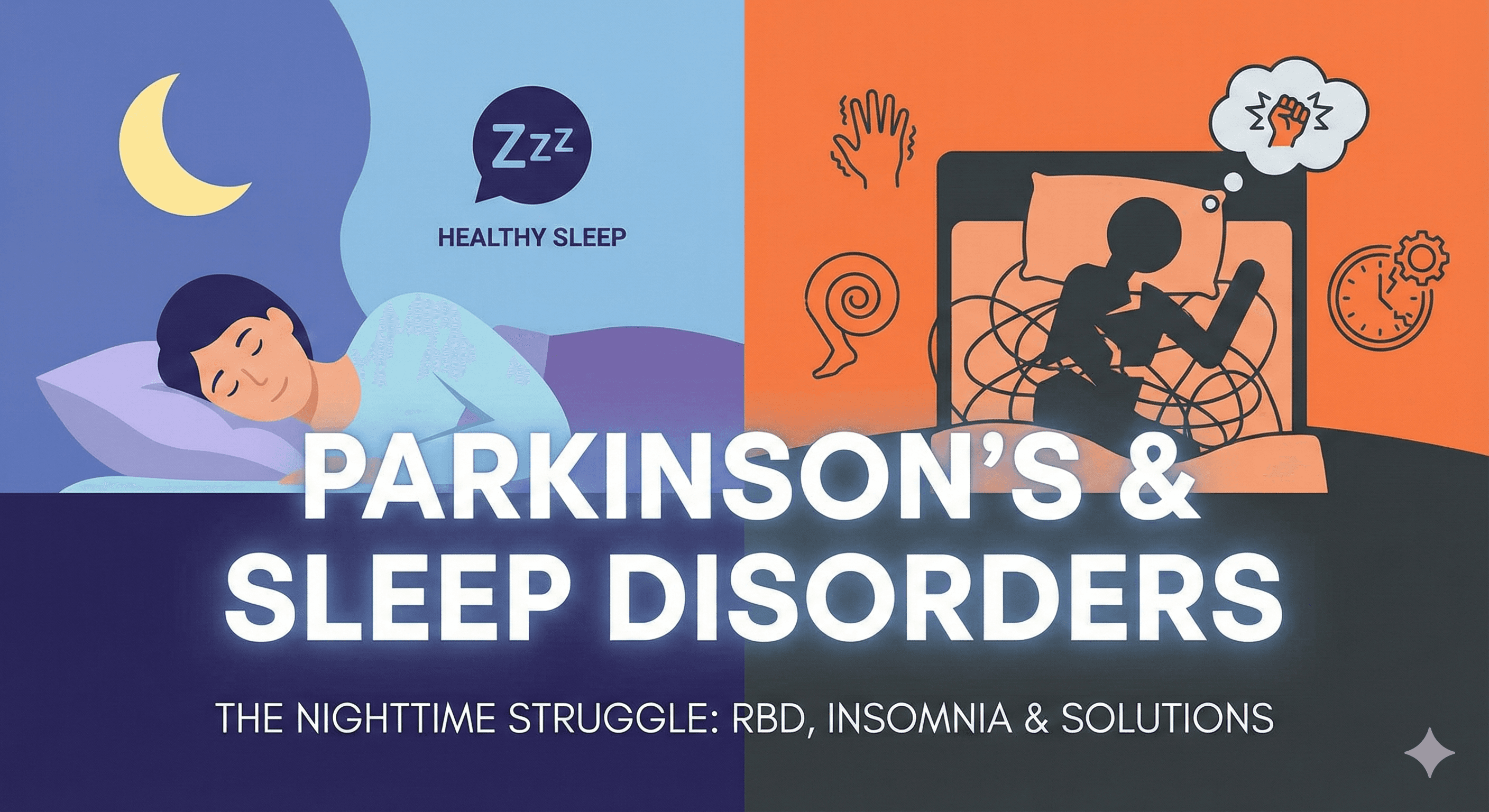
Sleep disorders are extremely common in Parkinson’s Disease (PD), affecting up to 90% of patients. These issues range from insomnia (trouble falling or staying asleep) to excessive daytime sleepiness and vivid dreams. A specific condition called REM Sleep Behavior Disorder (RBD), where patients act out their dreams, is a strong predictor of PD. Poor sleep worsens motor symptoms and cognitive function, making sleep management a top priority.
The Nighttime Struggle
For many with Parkinson's, the battle doesn't end when the sun goes down. In fact, nighttime can be the most difficult part of the day. Sleep problems in PD are caused by a combination of brain chemical changes (degeneration of sleep-regulating centers), motor symptoms (stiffness, inability to turn over), and medication side effects.
Common Sleep Disorders in PD
1. Insomnia
Sleep Fragmentation: Waking up frequently during the night is more common than trouble falling asleep.
Causes: Rigidity making it hard to get comfortable, nocturia (need to pee), or anxiety.
2. REM Sleep Behavior Disorder (RBD)
Normally, during REM sleep (dreaming sleep), our muscles are paralyzed so we don't act out our dreams. In PD, this "switch" is broken.
Symptoms: Yelling, punching, kicking, or thrashing during sleep.
Risk: Patients can injure themselves or their bed partners.
Significance: RBD often appears years before the tremor or stiffness of PD.
3. Restless Legs Syndrome (RLS)
An uncomfortable sensation in the legs (creeping, crawling) that creates an irresistible urge to move them. This usually happens in the evening and prevents falling asleep.
4. Excessive Daytime Sleepiness (EDS)
Feeling drowsy or falling asleep suddenly during the day.
Causes: Poor night's sleep or a side effect of Dopamine Agonists.
5. Sleep Apnea
Pauses in breathing during sleep. This causes oxygen levels to drop and fragments sleep further.
Managing Sleep Issues
1. Sleep Hygiene (The Basics)
Routine: Go to bed and wake up at the same time every day.
Environment: Keep the room cool, dark, and quiet.
Light Exposure: Get bright light in the morning to set your circadian rhythm.
Limit Naps: Long naps during the day steal sleep from the night.
2. Addressing Physical Discomfort
Satin Sheets/Pajamas: Friction makes turning over hard. Satin or silk reduces friction, making movement easier.
Medication Timing: A controlled-release form of Levodopa at bedtime can help prevent stiffness from waking you up.
3. Medical Treatments
Melatonin: Often used for RBD and insomnia.
Clonazepam: A prescription medication highly effective for treating RBD.
CPAP Machine: The gold standard treatment if Sleep Apnea is diagnosed.
Review Meds: If daytime sleepiness is severe, your doctor might adjust your dopamine agonists.
Key Takeaways
Safety first: If you have RBD, you may need to lower the bed or put a mattress on the floor to prevent injury.
It affects the day: Poor sleep leads to worse balance, more "OFF" time, and brain fog the next day.
Don't suffer in silence: Sleep problems are treatable. Tell your doctor if you are thrashing or waking up tired.
FAQ
Q: Why do I act out my dreams?
A: It is due to the loss of cells in the brainstem that control muscle paralysis during sleep. It is a hallmark of Parkinson's.
Q: Can I take sleeping pills?
A: Use caution. Standard sleeping pills can increase the risk of confusion and falls in older adults. Melatonin is often a safer first choice.
Q: Why am I so sleepy during the day even after sleeping all night?
A: You might have sleep apnea or poor sleep quality that you aren't aware of. Or, it could be a side effect of your medication.
Sleep disorders are extremely common in Parkinson’s Disease (PD), affecting up to 90% of patients. These issues range from insomnia (trouble falling or staying asleep) to excessive daytime sleepiness and vivid dreams. A specific condition called REM Sleep Behavior Disorder (RBD), where patients act out their dreams, is a strong predictor of PD. Poor sleep worsens motor symptoms and cognitive function, making sleep management a top priority.
The Nighttime Struggle
For many with Parkinson's, the battle doesn't end when the sun goes down. In fact, nighttime can be the most difficult part of the day. Sleep problems in PD are caused by a combination of brain chemical changes (degeneration of sleep-regulating centers), motor symptoms (stiffness, inability to turn over), and medication side effects.
Common Sleep Disorders in PD
1. Insomnia
Sleep Fragmentation: Waking up frequently during the night is more common than trouble falling asleep.
Causes: Rigidity making it hard to get comfortable, nocturia (need to pee), or anxiety.
2. REM Sleep Behavior Disorder (RBD)
Normally, during REM sleep (dreaming sleep), our muscles are paralyzed so we don't act out our dreams. In PD, this "switch" is broken.
Symptoms: Yelling, punching, kicking, or thrashing during sleep.
Risk: Patients can injure themselves or their bed partners.
Significance: RBD often appears years before the tremor or stiffness of PD.
3. Restless Legs Syndrome (RLS)
An uncomfortable sensation in the legs (creeping, crawling) that creates an irresistible urge to move them. This usually happens in the evening and prevents falling asleep.
4. Excessive Daytime Sleepiness (EDS)
Feeling drowsy or falling asleep suddenly during the day.
Causes: Poor night's sleep or a side effect of Dopamine Agonists.
5. Sleep Apnea
Pauses in breathing during sleep. This causes oxygen levels to drop and fragments sleep further.
Managing Sleep Issues
1. Sleep Hygiene (The Basics)
Routine: Go to bed and wake up at the same time every day.
Environment: Keep the room cool, dark, and quiet.
Light Exposure: Get bright light in the morning to set your circadian rhythm.
Limit Naps: Long naps during the day steal sleep from the night.
2. Addressing Physical Discomfort
Satin Sheets/Pajamas: Friction makes turning over hard. Satin or silk reduces friction, making movement easier.
Medication Timing: A controlled-release form of Levodopa at bedtime can help prevent stiffness from waking you up.
3. Medical Treatments
Melatonin: Often used for RBD and insomnia.
Clonazepam: A prescription medication highly effective for treating RBD.
CPAP Machine: The gold standard treatment if Sleep Apnea is diagnosed.
Review Meds: If daytime sleepiness is severe, your doctor might adjust your dopamine agonists.
Key Takeaways
Safety first: If you have RBD, you may need to lower the bed or put a mattress on the floor to prevent injury.
It affects the day: Poor sleep leads to worse balance, more "OFF" time, and brain fog the next day.
Don't suffer in silence: Sleep problems are treatable. Tell your doctor if you are thrashing or waking up tired.
FAQ
Q: Why do I act out my dreams?
A: It is due to the loss of cells in the brainstem that control muscle paralysis during sleep. It is a hallmark of Parkinson's.
Q: Can I take sleeping pills?
A: Use caution. Standard sleeping pills can increase the risk of confusion and falls in older adults. Melatonin is often a safer first choice.
Q: Why am I so sleepy during the day even after sleeping all night?
A: You might have sleep apnea or poor sleep quality that you aren't aware of. Or, it could be a side effect of your medication.
Sleep disorders are extremely common in Parkinson’s Disease (PD), affecting up to 90% of patients. These issues range from insomnia (trouble falling or staying asleep) to excessive daytime sleepiness and vivid dreams. A specific condition called REM Sleep Behavior Disorder (RBD), where patients act out their dreams, is a strong predictor of PD. Poor sleep worsens motor symptoms and cognitive function, making sleep management a top priority.
The Nighttime Struggle
For many with Parkinson's, the battle doesn't end when the sun goes down. In fact, nighttime can be the most difficult part of the day. Sleep problems in PD are caused by a combination of brain chemical changes (degeneration of sleep-regulating centers), motor symptoms (stiffness, inability to turn over), and medication side effects.
Common Sleep Disorders in PD
1. Insomnia
Sleep Fragmentation: Waking up frequently during the night is more common than trouble falling asleep.
Causes: Rigidity making it hard to get comfortable, nocturia (need to pee), or anxiety.
2. REM Sleep Behavior Disorder (RBD)
Normally, during REM sleep (dreaming sleep), our muscles are paralyzed so we don't act out our dreams. In PD, this "switch" is broken.
Symptoms: Yelling, punching, kicking, or thrashing during sleep.
Risk: Patients can injure themselves or their bed partners.
Significance: RBD often appears years before the tremor or stiffness of PD.
3. Restless Legs Syndrome (RLS)
An uncomfortable sensation in the legs (creeping, crawling) that creates an irresistible urge to move them. This usually happens in the evening and prevents falling asleep.
4. Excessive Daytime Sleepiness (EDS)
Feeling drowsy or falling asleep suddenly during the day.
Causes: Poor night's sleep or a side effect of Dopamine Agonists.
5. Sleep Apnea
Pauses in breathing during sleep. This causes oxygen levels to drop and fragments sleep further.
Managing Sleep Issues
1. Sleep Hygiene (The Basics)
Routine: Go to bed and wake up at the same time every day.
Environment: Keep the room cool, dark, and quiet.
Light Exposure: Get bright light in the morning to set your circadian rhythm.
Limit Naps: Long naps during the day steal sleep from the night.
2. Addressing Physical Discomfort
Satin Sheets/Pajamas: Friction makes turning over hard. Satin or silk reduces friction, making movement easier.
Medication Timing: A controlled-release form of Levodopa at bedtime can help prevent stiffness from waking you up.
3. Medical Treatments
Melatonin: Often used for RBD and insomnia.
Clonazepam: A prescription medication highly effective for treating RBD.
CPAP Machine: The gold standard treatment if Sleep Apnea is diagnosed.
Review Meds: If daytime sleepiness is severe, your doctor might adjust your dopamine agonists.
Key Takeaways
Safety first: If you have RBD, you may need to lower the bed or put a mattress on the floor to prevent injury.
It affects the day: Poor sleep leads to worse balance, more "OFF" time, and brain fog the next day.
Don't suffer in silence: Sleep problems are treatable. Tell your doctor if you are thrashing or waking up tired.
FAQ
Q: Why do I act out my dreams?
A: It is due to the loss of cells in the brainstem that control muscle paralysis during sleep. It is a hallmark of Parkinson's.
Q: Can I take sleeping pills?
A: Use caution. Standard sleeping pills can increase the risk of confusion and falls in older adults. Melatonin is often a safer first choice.
Q: Why am I so sleepy during the day even after sleeping all night?
A: You might have sleep apnea or poor sleep quality that you aren't aware of. Or, it could be a side effect of your medication.
Subscribe to our newsletter
© Copyright 2026 . All Rights Reserved

© Copyright 2026 . All Rights Reserved